Using LLMs for vibe agentic coding teaches you some things. For example, building working prototypes doesn’t require you to look at any code anymore. It just works™️ with some re-prompting here and there.
Another insight is that it suddenly opens the floodgates in a specific region of the software realm: Custom software.
At the extreme end of the spectrum, “custom software”, truly custom, is Software-for-1. This could be for 1 person, 1 family, your SO, your company. Whatever.
Misunderstandings
The goal of custom-for-1 software is often not the same as general purpose software.
I say ‘often’ because you can still “sell” it to a specific customer, but that is likely not a maintainable business since the software itself is… well… not re-usable by the very definition of custom-for-1-end-of-the-spectrum.
Some differences with general purpose software (excluding open-source):
- You have no plan of monetizing it. Making money here is - often - not the point.
- You (or 1 very specific user group) are the sole target of your custom software.
Even though this all might seem obvious, these topics are often forgotten/neglected when looking at the big numbers. Take a look at the following graph from this reddit post for example:
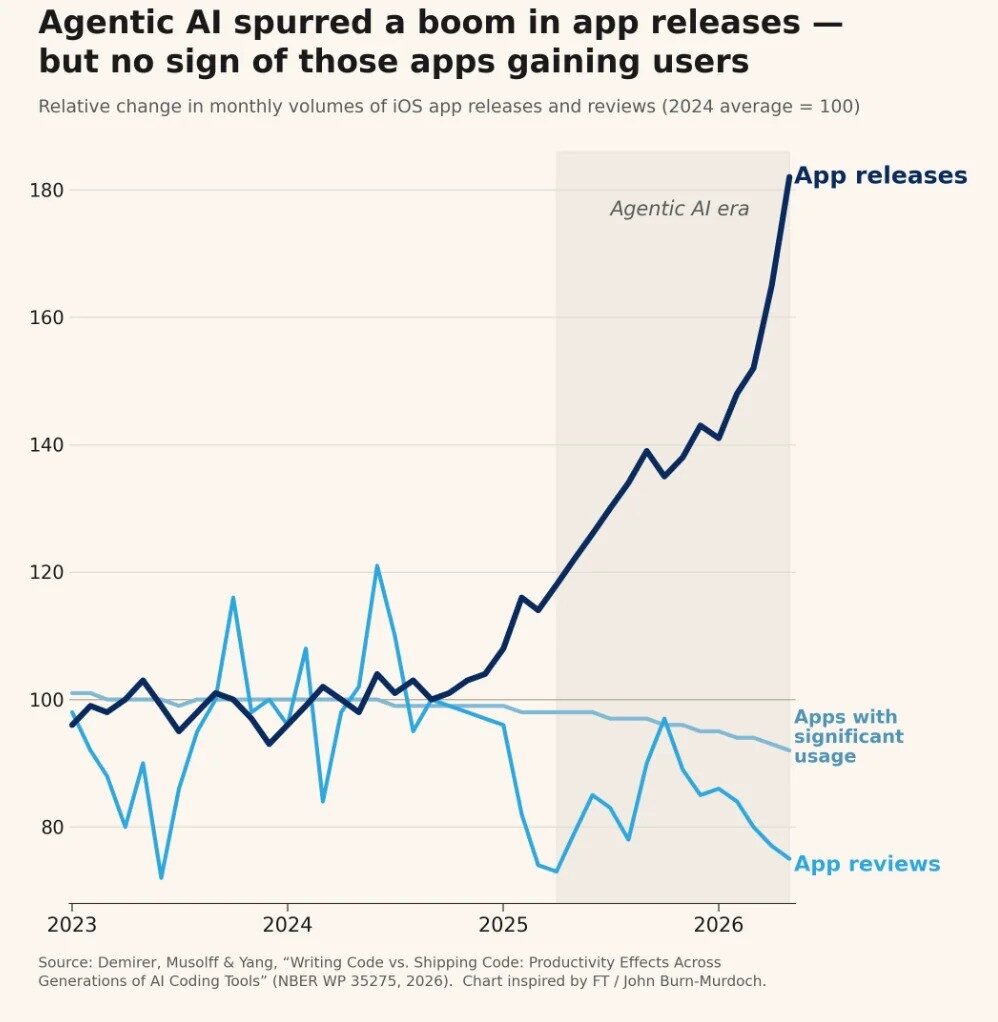
The problem with this graph is that it throws all “app releases” on the same pile, assuming all of these apps try to “gain users” and aim for “significant usage”, which is completely counter to our 2 points written above when talking about custom-for-1 software. The referenced source in the reddit post goes into much more detail on things like what qualifies as apps. Now let’s take a look at these different kinds of ‘apps’ related to this use case.
Piggy-backing 🐖
When you build your own custom-for-1 software, you have different options for running/hosting it.
Option #1 - You-yourself are the only ‘customer’:
- Developed an Android app just for yourself? Just package it as an APK and directly install it on your own device.
- Developed a browser extension just for yourself? Just install it in dev-mode in your browser.
Option #2 - Your SO, some friends or colleagues are your intended target. Now you want to distribute it in a convenient manner.
- Developed an Android app? -> publish it in Play Store
- Developed a browser extension? -> publish it in Chrome Web Store / Firefox Add-ons
To put it differently, when hosting custom-for-1 apps:
I’m not interested in “growth”, I’m just piggy-backing on your software distribution platform
Last modified on 2026-06-28